Sunday, January 22, 2017

Why Officers Kill in Oklahoma City but not in Buffalo, New York: Police-Induced Homicides by Metro Area

The rate of homicides caused by police in America is around 3.3 homicides per million people annually. I calculated this rate by taking the total number of police-induced deaths (including via Taser and physical force) I’ve cataloged in the Lethal Force Database and dividing by the U.S. population, then dividing by the number of years of data I’ve collected (1.83 at this point).

3.3 people killed by police per million Americans is not a geographically constant rate. There are maximums and minimums. In the north and east, the rate is low, and the rate tends to increase as one travels southward and westward. Just one person was killed by police in the state of Rhode Island between January 2014 and October 2015, so Rhode Island had the lowest police-induced homicide rate in the nation (0.5 homicides per million residents), while New Mexico, which had double the population of Rhode Island but 35 times more police-induced homicides, had the highest rate (9.2 homicides per million residents).


Breaking it down into America’s 382 metropolitan statistical areas reveals even more heterogeneity in the police-induced homicide rate. The deadliest location in the United States was Grants Pass, Oregon, with a rate of 19.7 people killed by police per million residents per year, six times the national rate. At the other end, 95 metro areas enjoyed 22 months without a single officer-involved fatality; the largest of these metro areas was Buffalo, New York.


What are the characteristics of metro areas with high rates of fatal officer-involved shootings? Why are some places prone to repeated tragedies, like Oklahoma City, Albuquerque, and Salinas, California, while others rarely see a fatal police shooting, like Buffalo, Toledo, or Fayetteville, Arkansas?

I looked at 35 measures of metropolitan statistical areas that I thought might have some kind of relationship with the police-induced homicide rate. Then I downloaded a statistics program, JASP, to determine if there was any correlation between the rate at which people are killed by police and any other characteristic of a metro area. (My knowledge of statistics comes from one undergraduate level course in engineering statistics, plus what I read on the internet, so I will probably be making many errors in my descriptions of statistics in this piece.)

The set of 35 characteristics of metro areas that I was able to look at include deaths by homicide, suicide, drugs and alcohol from the Centers for Disease Control and Prevention’s WONDER database, averaged over a four year period between 2012 and 2015. I also split out the suicide and homicide deaths by whether or not the death occurred through use of a firearm, and I calculated the ratio of firearm deaths to all deaths for suicides and homicides. I also included the murder rate and the violent crime rate from the FBI’s Uniform Crime Reports for 2014, and I included 19 separate characteristics from the U.S. Census American Community Survey, taken either from 2015 alone or averaged from 2011-2015. These U.S. Census variables include median household income, poverty rate, racial demographics, median age, fertility rate, household size, housing characteristics, education, foreign language, foreign-born population, and veteran status. In addition to these 2015 measurements, I also included the 2013 median household income and calculated a median household income growth rate over two years for each metro area. And finally, I also calculated the ratio of median home price to median household income as a measurement of housing affordability in each metro area.

I used JASP to derive a Bayesian correlation matrix for each of the 35 variables. I looked at both Pearson’s correlation coefficient, which looks at a linear correlation, and Kendall’s rank correlation coefficient, which looks at an ordinal association. JASP used a system to flag correlations that were significant, with one star showing positive evidence of a correlation, two stars showing strong evidence, and three stars showing very strong evidence of correlation. One star was equivalent to a Bayes Factor BF10 of 10, two stars indicated a value for BF10 equal to 30, and three stars indicated that BF10 equaled 100 or greater. The hypothesis was that the variables were correlated, not that they were correlated positively or correlated negatively.

I restricted my dataset to only the 104 metro areas with a population of 500,000 or greater. Smaller metro area populations get a bit noisy, and if an officer-involved shooting just happens to occur in the 22-month window of my dataset in a metro area like Cumberland, Maryland (population 101,225), it can artificially send my calculated police-induced homicide rate soaring (in the case of Cumberland, Maryland, to 5.4 deaths per million, 70% higher than the national average. The chance that 5.4 deaths per million is even within 50% of whatever the true rate is is not very likely, or at least, not nearly as likely as a one-death rate in a metro area like Syracuse, New York, (population 661,934) where I’m pretty sure that if the true rate isn’t 0.8 deaths per million, it is very likely also very low. 

Results


The strongest evidence for a Pearson’s rho linear correlation was between  the police-induced homicide rate and the non-firearm homicide rate. Alcohol death rate and firearm suicide rate were also very strongly correlated with rates of people killed by police.

Metro area statistic

Pearson’s rho

BF10

Evidence for correlation

Non-firearm homicide rate

0.437

5037.524

Very strong

Alcohol death rate

0.403

857.406

Very strong

Firearm suicide rate

0.399

706.087

Very strong

All homicide rate (CDC)

0.359

123.355

Very strong

All suicide rate

0.356

107.957

Very strong

Violent crime rate

0.350

85.432

Strong

Firearm homicide rate

0.324

31.477

Strong

Murder rate (UCR 2014)

0.316

23.994

Positive

Ratio: firearm suicides to all suicides

0.314

21.741

Positive

College graduation rate

-0.297

12.554

Positive


The strongest evidence for a Kendall’s tau-b ordinal rank correlation was between the police-induced homicide rate and the firearm suicide rate, though the overall suicide rate and the non-firearm homicide rate also showed very strong evidence of a correlation with the rate of police-caused killings.

Metro area statistic

Kendall’s tau-b

BF10

Evidence for correlation

Firearm suicide rate

0.295

2184.977

Very strong

Non-firearm homicide rate

0.279

791.556

Very strong

All suicide rate

0.253

165.468

Very strong

Ratio: firearm suicides to all suicides

0.248

141.734

Very strong

Violent crime rate

0.248

126.251

Very strong

Alcohol death rate

0.236

63.603

Strong

Median age

-0.232

54.047

Strong

Geographical mobility

0.232

51.833

Strong

All homicide rate (CDC)

0.225

37.064

Strong

Murder rate (UCR 2014)

0.221

31.053

Strong

Fertility rate

0.212

19.235

Positive

Firearm homicide rate

0.205

13.948

Positive


Suicide and Homicide Rates


The firearm suicide rate and the non-firearm homicide rate both appear to be very important to the rate of people killed by police (KBP rate).


Their counterparts, non-firearm suicide rate and firearm homicide rate, also showed some evidence of correlation with the KBP rate, but the evidence for a correlation was weaker.


What does this mean? Well, correlation does not equal causation, so I can’t say for sure. But it would make sense that suicides would correlate with the KBP rate. For the ten months of 2015 that I’ve analyzed so far, I was able to classify 213 of the 908 incidents (23%) as a suicide-by-cop situation, where the decedent had been feeling suicidal prior to the intervention of police. (In 102 of these incidents, the police knew the person was suicidal before arriving on the scene.)  And it would also make sense that specifically the rate of suicide by firearm would correlate with the KBP rate because it is an indication of places where guns in the home are more prevalent. This is borne out by the fact that the ratio of firearm suicides to all suicides also showed a very strong correlation with the KBP rate with regard to Kendall’s rank correlation coefficient, and a weaker but positive correlation with regard to Pearson’s correlation coefficient for linear fitness.  The firearm suicide to all suicide ratio is used in research as a proxy for firearm ownership due to the fact that publicly-funded research into measuring the number of firearms in a community is not allowed by congress.


However, I am not sure why the rate of homicides caused by implements other than firearms would show such a strong correlation with the police-induced homicide rate. It seems real. Of the top nine metro areas with a population greater than 500,000 ranked by highest KBP rate, four of them also appear in the top eight of metro areas ranked by non-firearm homicide rate (#1 Oklahoma City is #7, #2 Bakersfield is #1, #7 New Orleans is #6, and #9 Las Vegas is #8). All of the top 10 metro areas with the highest KBP rate appear in the top third of metro areas ranked by non-firearm homicide rate. Evidence for a correlation with firearm homicides is positive to strong, though weaker than the correlation with non-firearm homicides.

Violent Crime and Murder Rates 


Samuel Sinyangwe of Mapping Police Violence made an infographic that argued that the rate of police-induced homicides was not related to violent crime rate in a city.

 from mappingpoliceviolence.org

Sinyangwe made a claim that “levels of violent crime in US cities do not make it any more or less likely for police to kill people”. I found that actually a metro area’s violent crime rate showed either a strong or very strong correlation with a metro area’s rate of people killed by police. It’s not so obvious when shown on a graph like the one Sinyangwe made, but unless the correlation is close to perfect, that kind of graph is going to appear to show randomly scattered data to the human eye. One key difference between my investigation and Sinyangwe’s is that Sinyangwe only counts cities and not metropolitan areas, which I believe allow for a fairer comparison between cities with incorporated areas that only encompass dense urban places like St. Louis and cities whose incorporated areas include both a dense inner city part and more sprawling suburban parts, like Oklahoma City. 


The murder rate as derived by the UCR for the year 2014 showed weaker evidence for correlation with the KBP rate for 2014-2015 than did the homicide rate as derived by the CDC for the years 2012-2015. The violent crime rate appears to be a better predictor of the KBP rate than the murder rate.

Alcohol and Drug Rates


30% of the people killed by police officers from January through October 2015 were known to be intoxicated with either drugs or alcohol (or both) at the time of their death (272 out of 908). Many more probably were intoxicated, but we will never know because officials don’t always release this information. It is often the case that the actions taken by the intoxicated person led police officers to react in a way that ended with the intoxicated person’s death. It stands to reason that the rate of death by drugs or alcohol would be correlated with the rate of death by police, if we can assume a correlation between the death rate by alcohol and drugs to the usage rate of alcohol and drugs. However, the alcohol death rate showed much stronger evidence for a correlation with the KBP rate than did the drug death rate.


Race and Other Census Data


One thing striking to me about this analysis was that evidence for a correlation between race and the rate of police-induced homicides was very weak. 


The percentage of a metro area composed of black people mostly showed no correlation with the KBP rate, though if there was a correlation, it showed a slightly decreasing tendency in the KBP rate (the Pearson’s rho was -0.069, Bayes Factor of 0.155). This was surprising to me. Black people get killed by police at a rate three times higher than white people (7.1 deaths per million black people versus 2.5 deaths per million white people), so I expected metro areas with higher numbers of black people to generally also be high in the rate of people killed by police, but this wasn’t the case. 

It is doubly interesting when one considers the fact that the KBP rate was correlated with the violent crime rate. Sam Sinyangwe probably made that graph at mappingpoliceviolence.org in response to a police argument that the reason for the disproportionate rate of black people getting killed by police was that black people tended to be the perpetrators of violent crime, and officers have more deadly interactions with violent criminals. (I found that the percentage of black people in a metro area was very strongly correlated with the violent crime rate (Pearson’s rho 0.361, Bayes Factor 130.3)). Yet the evidence, at least for the largest 104 metro areas, shows that the KBP rate is correlated with the violent crime rate and is not correlated with the percentage of black people living in the metro area.

The correlation with the percentage of Hispanic people was slightly more significant, but not significant enough to state with confidence that it was not due to randomness (Pearson’s rho of 0.254, Bayes Factor of 3.477). The non-white percentage was slightly more correlated (Pearson’s rho 0.261, Bayes Factor 4.197) but not enough to claim that it was a significant predictor of the KBP rate.

In fact, most of the census-based data showed no significant evidence of correlation with the KBP rate. I expected that certain variables, like travel time to work, household size, percentage of single unit housing, and the percentage of rental occupied housing units would probably not show a correlation with the KBP rate. But I was a bit surprised that the data did not suggest that poverty rate, median household income, housing affordability, foreign born population, foreign language use, or high school graduation rate was significantly correlated with the KBP rate either. In fact, the KBP rate was the least responsive to variability in the housing affordability variable; the linear fit of the data is just a horizontal line.


The census variables that did show at least positive evidence of a correlation were the college graduation rate, median age, geographical mobility, and fertility rate; the first of these showed significance in Pearson’s rho but not in Kendall’s tau-b, and the final three showed significance in Kendall’s tau-b but not in Pearson’s rho.

What can we conclude from this? The rate at which people are killed by police in a given metro area is generally affected by the metro area’s guns, booze and crime, and not necessarily by what type of people live in the metro area. But even after controlling for these metro area characteristics, a lot of noise exists within the dataset. This is to be expected. Police-induced homicides occur due to actions by individual police officers and individual decedents, no matter what the alcohol-caused death rate or whatever is like in their city. But this data does suggest that if somehow we could reduce the amount of crime or the number of guns or abuse of alcohol (but not necessarily drugs), there might also be an associated positive reduction in the number of people killed by police officers.

    
Relationship between population and number of people killed by police

Thursday, July 7, 2016

Are Black People Who Carry Guns Treated Differently than White People?


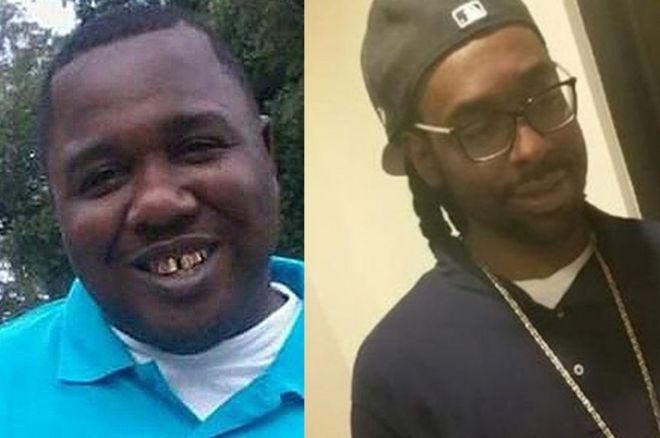
On July 5, Alton Sterling, a black man, was shot and killed by police officers in Baton Rouge. Police officers killed Sterling likely because they believed he was reaching for a gun that he had in his pocket. On July 6, less than 24 hours later, Philando Castile, a black man, was shot and killed by a police officer in Falcon Heights, Minnesota. The police officer killed Castile likely because he believed Castile was reaching for a gun that he had in his car. According to Castile's girlfriend, Castile had a permit to carry; Alton Sterling lived in Louisiana, a state where a permit is not required to openly carry a weapon.

There are many people right now on Twitter venting their frustration at what they believe is a racial disparity in how police treat people with guns.


Judging by this selection of tweets, it seems that people believe that police officers perceive threats from black people with guns more readily than white people with guns. But this sentiment is not quite fully borne out by the data that I've collected over the past couple of years.

As part of the Lethal Force Database, I've attempted to determine the reason police have fired their weapons when they kill a person. According to my tally, 874 people were killed by police between January 1, 2014 and September 9, 2015 who were carrying real (not toy, BB or replica) guns. 55% were white, 25% were black, and 16% were Hispanic or Latino.

78% of these 874 people were killed by police because they were either pointing or shooting a gun at police or someone else. (This information usually comes from statements released by police departments or investigations conducted by prosecutors in which they interview the police officers who pulled the trigger.) Only a very small number, 2%, of gun-carriers killed by police were non-confrontational with their gun. This number includes people carrying guns on their person but not in their hand, a situation that applies to both Philando Castile and Alton Sterling.

There is a small racial disparity in this number. While only 1% of white gun-carriers killed by police were non-confrontational with their gun, 3% of black gun-carriers were non-confrontational, and 4% of Hispanic gun-carriers were non-confrontational.


It is difficult to say if police treat black gun-carriers differently than white gun-carriers due to the small numbers involved in this study. However, and not to sound too conspiratorial, I do believe that there is something not represented in these numbers about how threats are perceived by police officers. I'll give four examples of black men killed by police who had guns but were running away when they were shot.

On October 12, 2014, Ronald Johnson was shot twice by Chicago PD officer George Hernandez as he ran away from police. At the time of the shooting, police claimed Ronald Johnson pointed a gun at police as he ran, but video evidence released by Cook County State's Attorney Anita Alvarez 14 months later showed that Johnson never turned as he was shot. I initially classified this as a decedent pointing a gun at police, but after the video was released, I changed it to a decedent running away with a gun (non-threat).

On January 17, 2015, Terence Walker was shot three times by Muskogee PD officer Chansey McMillan. Walker had been running away with a gun, dropped the gun, went to pick it up, and was shot. McMillan's body cam footage, taken on a bright clear day, showed Walker looking at McMillan as he retrieved the gun, then starting to run away again when McMillan shot him. But according to police and the district attorney who cleared the police officer of all charges, the video showed Walker pointing the gun at McMillan as he ran away. I classified this as a decedent pointing a gun at police, but I don't feel that this was actually what the video showed.

On April 2, 2015, Darrin Langford was running away with a gun in his hand when he was shot three times in the back by Rock Island police officer Ryan DeRudder. The district attorney's report stated that "Officer DeRudder feared for his safety when Langford started turning to his right with the gun in his right hand." I had to classify this as a confrontational gun-carrier without any other evidence.

Two days later on April 4, 2015, Justus Howell was shot twice in the back by Zion, Illinois police officer Eric Hill as he ran away with a gun. The district attorney's report indicated that Howell began to turn slightly towards Hill. I had to classify this as a confrontational gun-carrier without any other evidence.

These are just the examples that I remember. There are many incidents where the police statement that "a gun was found at the scene" is used as reason enough to trust that police did the right thing in taking out a dangerous threat. But without video evidence, we will never know if police were telling the truth or not. Regardless, the point of this post is to say that the evidence for a racial disparity in police behavior regarding gun carriers is not yet so persuasive in the data I've collected.

Sunday, June 19, 2016

In Both Rich Places and Poor Places, Black People Get Killed By Police More

(Centre Daily Times via Getty Images / Huffington Post)

It is now a well-known fact that black people get killed by police in the United States at a rate disproportionate to their population. Despite making up just 13% of the population, black people constituted 26% of people shot and killed by police in 2015, according to the Washington Post. The Guardian found a similar percentage, 27% for 2015, and Sam Singyangwe's Mapping Police Violence puts this total at 30%. I've also found a similar number through 20 months of data from January 2014 through August 2015 as part of the Lethal Force Database. I've found black people are 27% of the victims of police force acts, and 26% of victims of police gunfire.


Black people get killed at a rate roughly three times that of white people. I've found that while white people were killed by police at a rate of 2.5 deaths per million, black people were killed at a rate of 7.1 deaths per million. The Guardian found these rates to be 2.94 and 7.25 per million, respectively in 2015.


What isn't yet agreed upon is why black people get killed at a much higher rate by police than white people. Some, like University of South Florida criminologist Lorie Fridell argue that police officers may have implicit biases against black people and are therefore more likely to shoot black people due to a perceived threat that may not be real. There are also those who argue that the biases are not so implicit, and that "white supremacy" is the cause of many shootings; in this camp the debate has become whether the explicit biases are systemic or limited to a few "bad apples". For example, Ryan Cooper, writing for The Week, made a case for the number of police shootings being directly tied to poverty, in a piece entitled "To End Police Violence, We Have to End Poverty".

But there are many who say that the root cause of black people getting killed at a higher rate than white people is the fact that they have more interactions with officers. Officers, whose job it is to enforce the law, will naturally be more readily found in high-crime neighborhoods, and black people are more likely to live in high-crime neighborhoods than white people. Thus, if there is an equal risk of a police shooting per encounter, as Harvard economics professor Sendhil Mullainathan supposes in this New York Times piece from October 18, 2015, black people should be overrepresented in police shooting incidents.

David French, conservative writer and #nevertrump presidential candidate for a week, represented this viewpoint in a piece for the National Review on December 29, 2015 entitled "Black Lives Matter is wrong about police". French asserted that "racial disparities in the use of force are largely explained by racial disparities in criminality." He looked at the numbers published by the Washington Post and the Guardian and found an underrepresentation, not an overrepresentation. French pointed out that the black percentage of those killed by police was low compared to the black percentage of homicide and robbery arrests, categories where black people are in the majority (though he neglected to point out that in every other arrest category, from aggravated assault and rape to curfew and loitering law violations, white people are the majority). French argued:

Given these disturbing disparities, no rational person would expect police shootings to precisely track with demographics. Police follow crime, and they tend to operate in high-crime areas. It would be alarming if there were statistically significant racial variations in the use of force even after adjusting for crime rate....

Well, I may have some alarming news for David French.

I combined the zip code location of each death caused by police action in the Lethal Force Database with U.S. Census data on that zip code's population, demographics, and income (technically Zip Code Tabulation Areas). Then I sorted the zip codes by median household income and calculated a rate of death for each income quintile.

It has been shown by the Bureau of Justice Statistics and others that there is a correlation between violent crime and poverty.  I have found that there is also a striking correlation between lethal force incidents and poverty. While the rate of death for the entire U.S. is about 3.3 deaths per million people, the rate in the poorest quintile of zip codes (defined by median household income) is nearly double that, at 6.1 deaths per million people. If David French would agree that there is a link between criminality and poverty, then the fact that poor zip codes are the setting for a higher rate of lethal force incidents would not surprise him.


It is also true that black people are more likely to live in the poorest quintile of zip codes than in any other quintile of zip codes. While black people make up 13% of the U.S. population, they constitute 28% of the population in the poorest quintile of zip codes in the U.S.


But here's where David French's argument parts ways with my analysis. If the risk of death from a police encounter were equal for each person in each quintile of zip codes, then black people would constitute only about 15% of the deaths by police in this country overall, despite making up 13% of the population, a slight overrepresentation. (Due to rounding, this difference is closer to 3% than 2%.) But the actual percentage of lethal force incidents in the Lethal Force Database involving black people is much higher: 27%.

In the poorest quintile of zip codes, the rate of death for black people is 9.3 deaths per million. For white people, this rate is only ("only") 4.7 deaths per million. In fact, for each quintile of zip codes sorted by median household income, black people get killed at a much higher rate than white people.


But it's not just the poorest zip codes that show this disparity. A black person in the richest quintile of zip codes is more likely to be killed by police (5.2 deaths per million) than a white person in the poorest quintile of zip codes (4.7 deaths per million). While a black person in the poorest quintile is only ("only") twice as likely to die at the hands of a police officer than a white person in the poorest quintile, a black person in the richest quintile of zip codes is 3.6 times more likely to be killed by police than a white person in the richest quintile of zip codes.


An almost identical relationship is present when the poverty rate (percent of individuals within the zip code with a household income below the poverty level) is used instead of median income. The more poverty exists within a zip code, the higher the rate of lethal force incidents for each racial group, but the rates for black people are always higher than the rates for white people.


There are at least three problems with this analysis, however. The first is that these death rates are calculated with a denominator of residents of the zip code, but victims of lethal force incidents are not always killed in the zip code in which they reside.  I just did a quick analysis of the first thirty incidents (sorted alphabetically by first name, so all the Aarons, Adams and Adrians basically), and I found that thirteen incidents took place in the zip code in which the decedent probably resided, five were likely out of the zip code (the results of car chases mostly), six were unknown, and six were not counted in the database. If this was a representative sample for the entire database, then the fraction of lethal force incidents that occur in the zip code in which the decedent resided is greater than half but less than four fifths. The fewer incidents that take place inside the zip codes of the decedents' households, the less valid this analysis is.

The second problem is that zip codes may not be a small enough geographical area to meaningfully portray crime and poverty. High-crime areas and high-poverty neighborhoods often share a zip code with safer and more affluent neighborhoods. If all the lethal force incidents come from the high-crime neighborhoods of the zip codes, and the high-crime neighborhoods have a large relative share of black people, then David French's assertion that black people are only targeted by police gunfire because black people commit more crimes would not be incompatible with this data. One solution to this issue would be to focus on census tracts, which have only a couple thousand people per tract. This was actually done in a project started by Reuben Fischer-Baum and Ben Casselman of Fivethirtyeight.com in June 2015, shortly after the Guardian launched their own database of police killings. Using data from the first five months of 2015, they found that 42% of lethal force incidents involving black people occurred in the poorest quintile of census blocks while 44% of black people nationwide live in such census blocks. (I found that while 41% of lethal force incidents involving black people took place in the poorest quintile of zip codes, only 33% of black people nationwide live in such zip codes.) This finding echoes my thesis, that black people get killed by police at higher rates than white people no matter how economically prosperous their part of the city is. If poverty and crime were the reason black people were killed at a higher rate than white people, then one would expect to see a much greater percentage of lethal force incidents in poor census tracts than the percentage of black people living in such tracts.

The third problem with my analysis is the possibility that individual actions that lead to lethal force incidents might not be clarified by statistics and generalizations. Lethal incidents most often take place because an individual points or fires a gun at or near police officers, no matter the race. If, for whatever reason, black people do this more often than white people, black people are going to be overrepresented in the police shooting data. And those reasons may be diverse. Black people, 13% of the population, are overrepresented in the numbers of mentally ill people shot by police (24%),

(based on January 2015-August 2015 data)


in the number of people shot by police while known to be intoxicated by drugs or alcohol (24%),

(based on January 2015-August 2015 data)
and in the number of people tased by police who later die (often aided by a combination of intoxication and obesity) (48%).

(based on January 2014-August 2015 data)
It is possible that black people are shot by police at high rates because a variety of social problems can affect people's choices, including "bad apple" cops, poverty, criminality, obesity, drug abuse, more contact with police officers, or lack of access to mental health facilities. In some sense, this can all be lumped in with racism, either on an individual level or a systemic level. But in most cases, police officers are found (justly or not) to be justified in their actions because they face a legitimate threat from an individual, not from a society, a race or class of people.

Interpretation of this zip code analysis should be done with caution for these reasons. But I think it's important to recognize that the anger that drives the Black Lives Matter movement is based in part on this high rate of black homicides by police officers that spans neighborhoods of all income levels and crime rates, and this is a true thing, regardless of one's partisan affiliation.


Sunday, May 1, 2016

District Attorneys Need to Release All Police Shooting Decision Memos to the Public

Public scrutiny of the institutions of government is one of the hallmarks of a functioning democracy. Public scrutiny should be heightened when those institutions of government determine that they are justified in taking someone's life.

Generally there is at least a minimum level of public scrutiny for cases involving the death penalty, and though state governments have tried to cut back on media access to executions, they have not totally banned the media from witnessing these events. But carrying out death penalty sentences makes up only a tiny sliver of the people legally killed by officers of the law in the United States every year.  In 2014 and 2015, the United States executed 63 people by lethal injection. This number is dwarfed by the 2,319 people killed by police officers over the same time period, according to data from killedbypolice.net.

For the vast majority of these officer-involved homicides, the officer involved was cleared of criminal charges. In these cases, the government has determined that it was justified in taking the life of an individual, a determination that can only be legitimate if an enhanced level of public scrutiny exists. But for hundreds of these cases, no information at all gets released to the public.


In April the Guardian ran an article about how often police lethal force incidents are found to be justified without the public ever hearing about it. The Guardian found that 1 in 6 deaths at the hands of police officers in the first three months of 2015 were later found to be justified without the public being notified. This is an important finding because the results of investigations into police shootings can only become public when the officer is no longer subject to criminal proceedings. It is these investigations that can tell us the truth (or as close to the truth as we can get) about what really happened, and not just the story that the police wanted the public to hear, often told in the hours right after the person was killed.  Hiding investigation results shields authorities from public scrutiny.  If no one knows that an officer was cleared, no one can ask why the officer was cleared.


Review of officer-involved homicides in America is usually the responsibility of a district attorney (or state attorney, or one of the many other names for this job; going forward I will use the term "district attorney" to mean the chief legal officer for the state, responsible for filing criminal charges). The review starts when the district attorney's office receives the investigation, which would have been conducted either by the police department responsible, or by an outside or state-run police investigation unit.  In some jurisdictions, the district attorney presents the investigation to a grand jury, and the grand jury determines whether or not charges are warranted against the officer, but in most, the review is handled within the district attorney's office. The protocol for reviewing officer-involved homicides varies greatly from state to state and from jurisdiction to jurisdiction. The review can be perfunctory or it could be thorough. Some district attorneys release a great deal of information to the public upon completion of the review: photographic and video evidence, police reports, medical examiners reports, toxicology reports, and a legal rationale for the decision. Some just release a narrative with no accompanying evidence, and some just inform the press that the decision has occurred without any other details (this is most common when a grand jury reviews the investigation).

And some release nothing at all to the public.


Los Angeles County District Attorney Jackie Lacey


Jackie Lacey is the district attorney for the county with the most police killings in the United States, Los Angeles County, California. Since she took office in 2012 through February 2016, there were at least 290 officer-involved shootings in the county. One would think that with such a high number of homicides by police officers, there would be a high level of public interest in her rationale behind declaring each police officer justified (no police officer in Los Angeles County has faced criminal charges for an on-duty shooting in 15 years). But even though Lacey's office does get involved with the investigation and issues a decision memo for each officer-involved shooting, that memo is never released to the media or posted on the DA's website, and the media is never informed of her decision. In 2015 the local NPR station KPCC released a collection of decision letters from Jackie Lacey's office for officer-involved shootings occurring between 2010 and 2014 that KPCC acquired through a request for information. The motivation for KPCC was public scrutiny.
On a large scale, a lack of public information means it’s hard to get a big picture on police shootings. The public is left in the dark on some of the biggest questions: How many unarmed people are shot? What race are those who are shot? What can be done to prevent more shootings?
Why did it take a special investigation from a media organization to acquire the data? It's possible that Jackie Lacey believes she is already releasing the information to the public. Responding to criticism about the district attorney's lack of independence from the Los Angeles Police Department, Lacey wrote an op-ed published in the Los Angeles Daily News on February 28, 2016, where she claimed that her detailed review of officer-involved shootings actually is "public."
My job is to make certain that every shooting is thoroughly reviewed in accordance with the law. To that end, I am confident that if you look at our legal analysis based on the evidence we had at the time, you will find that we made the right call in every case.
But it is impossible for a person to look at the legal analysis when the district attorney refuses to proactively release the information to the public.

The public release of all decision memos to a website ought to be the standard for all district attorneys. Though the practice is still uncommon, there are several district attorneys who already do this, including Orange County (California) District Attorney Tony Rackauckas, Sacramento County (California) District Attorney Anne Marie Schubert, and the District Attorney for Albuquerque, Kari Brandenburg, to name a few.* One of the most transparent offices in the country is led by Clark County (Nevada) District Attorney Steve Wolfson. In 2013, Wolfson changed the office's investigation policy and started posting to the district attorney's web page his decision memos. "It's the right thing to do," Wolfson told the Las Vegas Review-Journal. Of course, it took Eric Holder's Department of Justice releasing a critical comprehensive review of Las Vegas police shootings in 2012 to spur the district attorney's office into doing "the right thing."


*The website of  Kari Brandenburg's office contains very detailed decision memos regarding officer-involved shootings, but none more recent than 2014. Brandenburg has become involved in a standoff with the Albuquerque Police Department over her decision to pursue criminal charges against Keith Sandy and Dominique Perez, the two officers who shot and killed homeless man James Boyd in March of 2014. The Albuquerque Police Department has refused to forward their investigations into their officer-involved shootings to Brandenburg's office since that time, according to Brandenburg.


Cook County State's Attorney Anita Alvarez / Cuyahoga County Prosecutor Timothy McGinty


A truly "public" review process requires clear protocols, fast and efficient investigations, and proactive release of information after the review has been concluded. When district attorneys violate the trust of the public, either by stonewalling public requests for information or slow-walking the review process, they may face repercussions from the electorate, such as what happened to Chicago's and Cleveland's district attorneys.

Cook County (Illinois) State's Attorney Anita Alvarez only charged Officer Jason Van Dyke with the murder of Laquan McDonald, even though she had reviewed the incriminating dashcam video a year earlier, because a court order releasing the video to the public was about to go into effect.  Cuyahoga County (Ohio) Prosecutor Timothy McGinty took unusual measures to delay the investigation into the homicide of 12-year-old Tamir Rice before urging a grand jury to clear Cleveland Police Officer Timothy Loehmann of wrongdoing, which they did in December of 2015. Both Alvarez and McGinty lost subsequent elections; both were defeated by primary opponents in March of 2016.


Former Denver District Attorney Bill Ritter


Alvarez and McGinty were tough-on-crime district attorneys who struggled to keep up with the post-Michael Brown paradigm of public scrutiny for officers who kill civilians.  But in some communities, a long history of public scrutiny of police-involved homicides has led to tremendous improvements in transparency and public trust.  Way back in 1996, outrage at the shooting death of Jeffrey Truax by two off-duty Denver police officers prompted former Denver district attorney (and former Colorado governor) Bill Ritter to form a commission to look into "ways to improve the fairness and effectiveness of the investigative and charging process and strengthen both police procedures and public confidence in police officers."

The Erickson Commission, as it became known, recognized that it was in the best interest of the police department and the district attorney to release as much information as possible as quickly as possible in order to quell the public's suspicions about police officers who have killed civilians. The Commission recognized that "public," in the way that Los Angeles County District Attorney Jackie Lacey means (which is more like "available upon request"), is not sufficient to respond to the community's heightened interest in the propriety of officer-involved shootings.

While the entire investigation may be open to the public, very few individuals will have either the time or interest to review it, and those who do might naturally be expected already to have doubts about the filing decision. Especially after initial reports of a police shooting raising unanswered questions about its propriety, the community would be better served by some affirmative action by the police and district attorney to defend their decisions.

Probably no single factor can have a greater impact on this situation than the expeditious review of the investigation and announcement of a decision declining criminal prosecution. However, it is the opinion of the commission that once a decision is made and the investigation can be released to the public, the district attorney and police should take affirmative steps, whether through a decision letter or some other mechanism, like a press conference or use of public information television, to publicize not only the findings of the investigation but also the thoroughness of the investigation, including the procedures followed to guarantee its objectivity. When a decision is made not to file criminal charges, rather than taking a passive interest in publication or even minimizing publicity about the decision, the district attorney and police department have a duty in the public interest to educate the public and defend the decision if necessary.

The Erickson Commission released its findings in 1997, at a time when the internet was little more than a few Yahoo chat rooms and Geocities "under construction" gifs. Now the public is always connected to the internet, so public dissemination of information through "press conference or use of public information television" has morphed into news releases to media groups and the posting of decision memos and evidence from each officer-involved shooting to the district attorney's website.


Denver District Attorney Mitch Morrissey


Current Denver District Attorney Mitch Morrissey has continued to implement the Erickson Commission's recommendations of expeditious review of police shootings and proactive release of information. Most investigations are completed within six months of the incident, and every decision letter since 2000 has been posted to the district attorney's website.

The policies of Morrissey's office are seen as positive examples for other offices around the country to follow. Denver's district attorney was cited positively in the DOJ review of Las Vegas shootings as an example for Clark County's district attorney, for instance. The decisions themselves have been controversial in some cases, such as Morrissey's decision not to file criminal charges against the officers involved in killing Jessie Hernandez in January of 2015, and how no police officers have been charged with a crime for a shooting in Denver since 1992. But the content of the decisions are separate from the way the investigations are reviewed and disseminated to the public. We the public know a lot more about the Jessie Hernandez shooting than we know about, for instance, the Los Angeles police shooting of Ezell Ford, a shooting that caused a similar public outcry.  And the reason we know more is because the shooting happened in Morrissey's jurisdiction.

The culture of transparent review of officer-involved homicides has spread throughout Colorado. In 2015 a bipartisan coalition of state lawmakers introduced a package of bills to the Colorado General Assembly that aimed to reform not only police practices regarding officer-involved homicides but also increased the amount of transparency district attorneys would be required to provide to the public.  One of these was SB219, "Concerning Measures to Provide Additional Transparency to Peace Officer-Involved Shootings." SB219 requires district attorneys in Colorado to "release a report and publicly disclose the report explaining the district attorney's findings" upon completion of the investigation, and to "post the written report on its web site".  SB219 enshrined into law best practices for public release of information, though many Colorado district attorneys were already providing a lot of information to the public (Colorado ranks second in the Lethaldb.com Judicial Transparency Ranking, trailing only Oregon in the ranking that combines speed of investigation with completeness of publicly released data). SB219 was signed into law by Governor John Hickenlooper two months after being introduced in the General Assembly.

The Black Lives Matter-fueled nationwide discussion about officer-involved homicides has led to many reforms in many places. It is just as critical to reform the judicial processes surrounding police shootings as it is to reform police department practices. The fact that state houses are writing legislation to increase the transparency of district attorney's offices is a welcome development, directly attributable to the increase in the public's attention span since the Michael Brown shooting. It's amazing what a little public scrutiny can do.


Colorado State Capitol