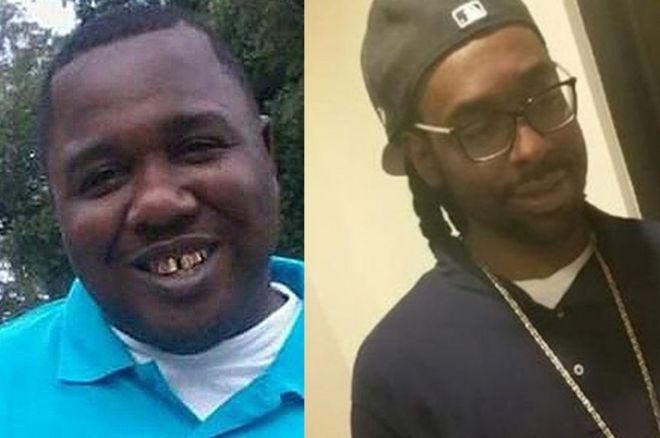
On July 5, Alton Sterling, a black man, was shot and killed by police officers in Baton Rouge. Police officers killed Sterling likely because they believed he was reaching for a gun that he had in his pocket. On July 6, less than 24 hours later, Philando Castile, a black man, was shot and killed by a police officer in Falcon Heights, Minnesota. The police officer killed Castile likely because he believed Castile was reaching for a gun that he had in his car. According to Castile's girlfriend, Castile had a permit to carry; Alton Sterling lived in Louisiana, a state where a permit is not required to openly carry a weapon.
There are many people right now on Twitter venting their frustration at what they believe is a racial disparity in how police treat people with guns.
Let's go NRA. I know y'all are for the 2nd amendment. Are you also for equal protection? https://t.co/PaKMcZ7ina— John Legend (@johnlegend) July 7, 2016
In an open-carry, castle law, stand-your-ground state, a black man is dead cuz he was selling CDs w/a gun in pocket. Get it? #altonsterling.— David Simon (@AoDespair) July 6, 2016
people joke that if more black people open-carry, it'll end open-carry but no, it will just end the black people who open-carry— Jason Linkins (@dceiver) July 6, 2016
Judging by this selection of tweets, it seems that people believe that police officers perceive threats from black people with guns more readily than white people with guns. But this sentiment is not quite fully borne out by the data that I've collected over the past couple of years.
As part of the Lethal Force Database, I've attempted to determine the reason police have fired their weapons when they kill a person. According to my tally, 874 people were killed by police between January 1, 2014 and September 9, 2015 who were carrying real (not toy, BB or replica) guns. 55% were white, 25% were black, and 16% were Hispanic or Latino.
78% of these 874 people were killed by police because they were either pointing or shooting a gun at police or someone else. (This information usually comes from statements released by police departments or investigations conducted by prosecutors in which they interview the police officers who pulled the trigger.) Only a very small number, 2%, of gun-carriers killed by police were non-confrontational with their gun. This number includes people carrying guns on their person but not in their hand, a situation that applies to both Philando Castile and Alton Sterling.
There is a small racial disparity in this number. While only 1% of white gun-carriers killed by police were non-confrontational with their gun, 3% of black gun-carriers were non-confrontational, and 4% of Hispanic gun-carriers were non-confrontational.

It is difficult to say if police treat black gun-carriers differently than white gun-carriers due to the small numbers involved in this study. However, and not to sound too conspiratorial, I do believe that there is something not represented in these numbers about how threats are perceived by police officers. I'll give four examples of black men killed by police who had guns but were running away when they were shot.
On October 12, 2014, Ronald Johnson was shot twice by Chicago PD officer George Hernandez as he ran away from police. At the time of the shooting, police claimed Ronald Johnson pointed a gun at police as he ran, but video evidence released by Cook County State's Attorney Anita Alvarez 14 months later showed that Johnson never turned as he was shot. I initially classified this as a decedent pointing a gun at police, but after the video was released, I changed it to a decedent running away with a gun (non-threat).
On January 17, 2015, Terence Walker was shot three times by Muskogee PD officer Chansey McMillan. Walker had been running away with a gun, dropped the gun, went to pick it up, and was shot. McMillan's body cam footage, taken on a bright clear day, showed Walker looking at McMillan as he retrieved the gun, then starting to run away again when McMillan shot him. But according to police and the district attorney who cleared the police officer of all charges, the video showed Walker pointing the gun at McMillan as he ran away. I classified this as a decedent pointing a gun at police, but I don't feel that this was actually what the video showed.
On April 2, 2015, Darrin Langford was running away with a gun in his hand when he was shot three times in the back by Rock Island police officer Ryan DeRudder. The district attorney's report stated that "Officer DeRudder feared for his safety when Langford started turning to his right with the gun in his right hand." I had to classify this as a confrontational gun-carrier without any other evidence.
Two days later on April 4, 2015, Justus Howell was shot twice in the back by Zion, Illinois police officer Eric Hill as he ran away with a gun. The district attorney's report indicated that Howell began to turn slightly towards Hill. I had to classify this as a confrontational gun-carrier without any other evidence.
These are just the examples that I remember. There are many incidents where the police statement that "a gun was found at the scene" is used as reason enough to trust that police did the right thing in taking out a dangerous threat. But without video evidence, we will never know if police were telling the truth or not. Regardless, the point of this post is to say that the evidence for a racial disparity in police behavior regarding gun carriers is not yet so persuasive in the data I've collected.

No comments:
Post a Comment